
News | Posted 12 January 2026
“Believe in people and go above and beyond”: Jasmyn’s story
Jasmyn shares her experience of rough sleeping, coming to Social Bite for free food, and how she overcame addiction.
A ‘normal’ coffee shop where everyone is equal
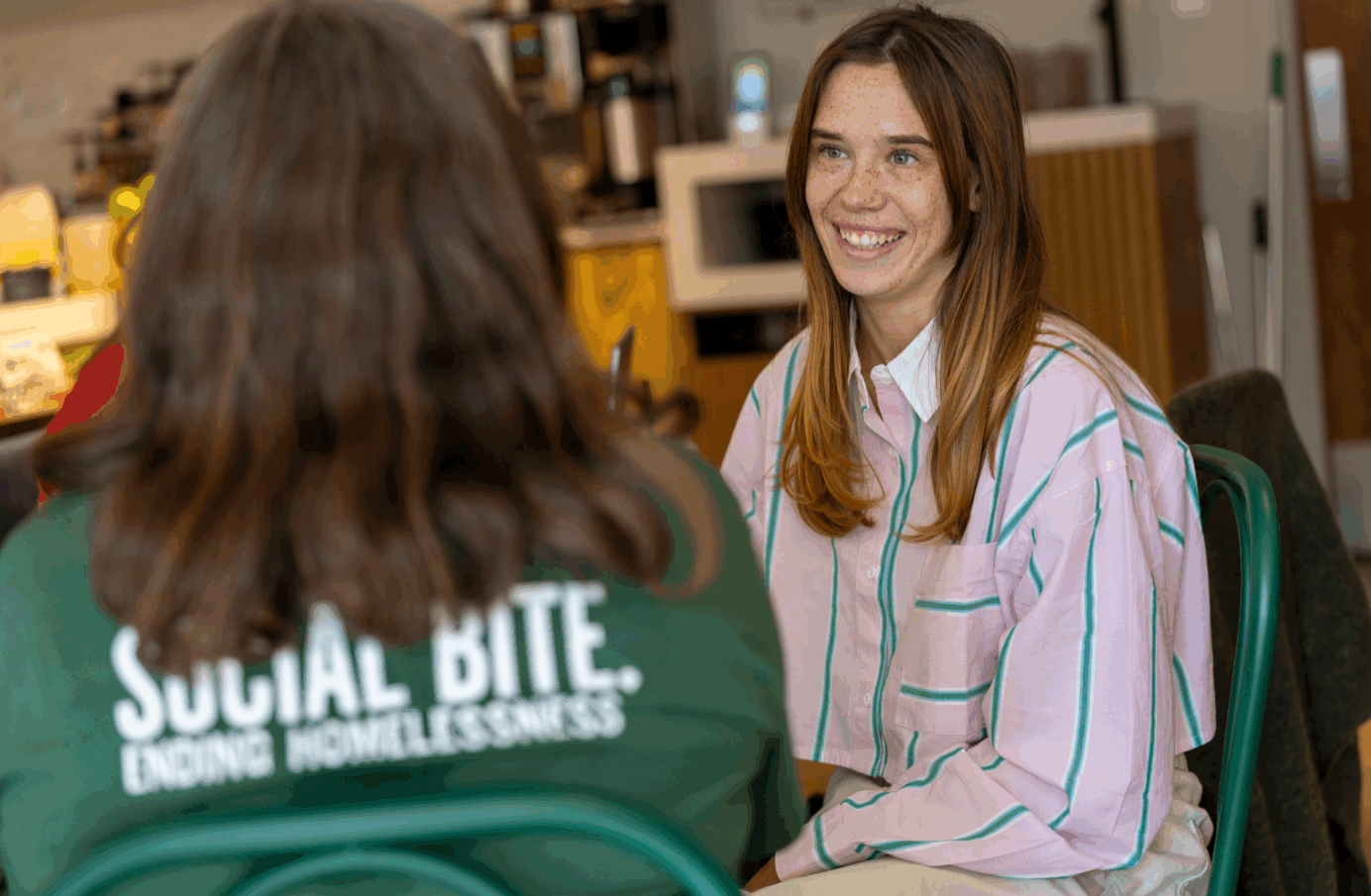
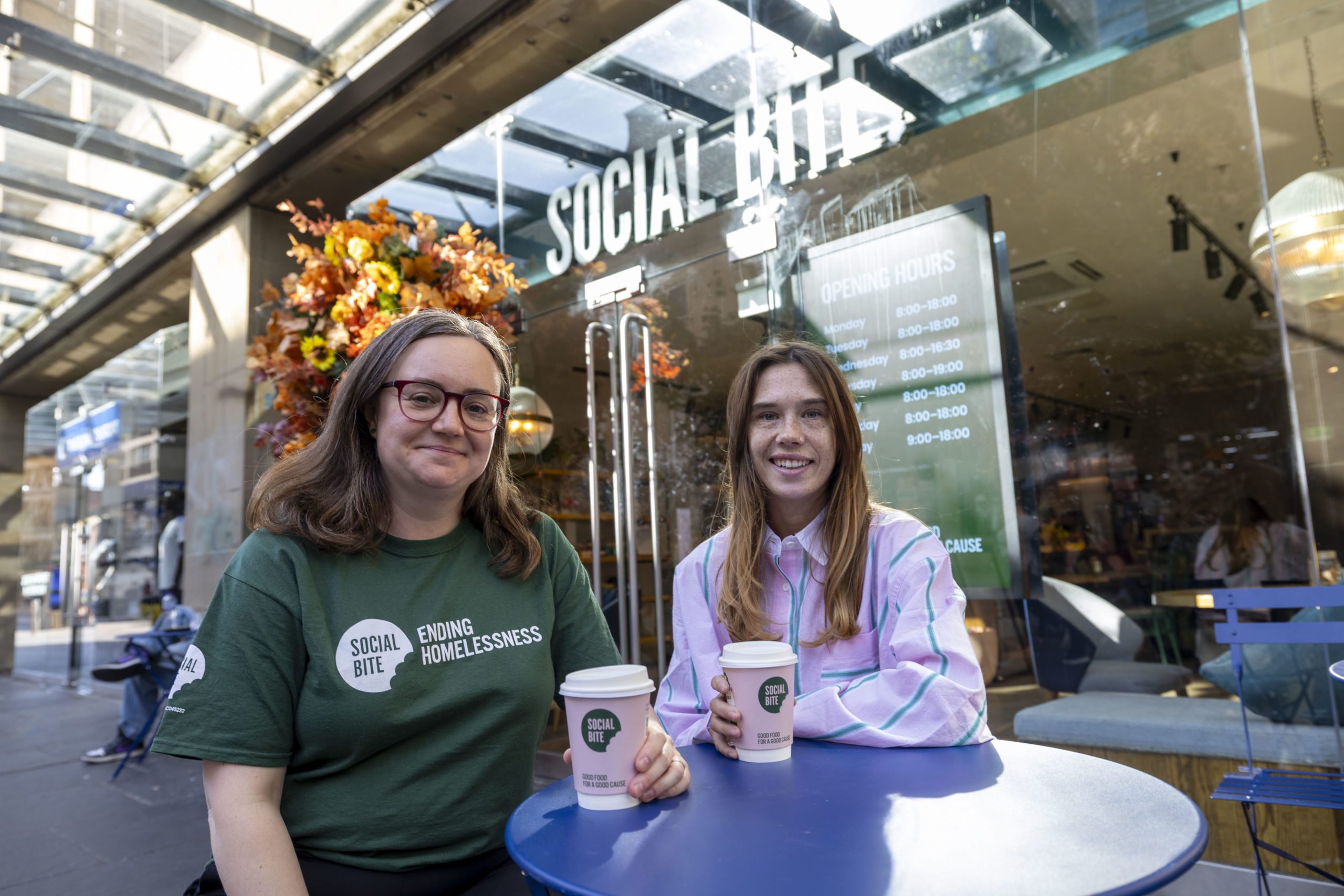
When Jasmyn was homeless, people she met rough sleeping recommended she try Social Bite. The first time she came to check it out, she was hesitant. “When I looked at the building, I was like, am I in the wrong place?” she reflects. “It looked like a normal cafe – like a Starbucks.”
Social Bite’s ‘normality’ was a real contrast to the other free food services Jasmyn had visited. They could be chaotic and stressful. They made her feel nervous.
But the vibe at Social Bite was completely different. “You could take your time. There was no rushing. I didn’t feel on edge at all. The staff were really friendly, asking how are you, what do you want [to eat].”
The food quality impressed Jasmyn too. “It tasted really good. Sometimes you eat things just because you’re hungry, but it did taste really nice.”
Jasmyn found that Social Bite wasn’t just about food. The whole environment created an experience where people were welcomed with respect. She found the mix of paying and free food customers particularly meaningful. “You’re treated like you’re human – you’re not just stigmatised,” Jasmyn explains.
Free food provides choice and a different path
After a relationship breakdown and struggling with postnatal depression, Jasmyn found herself on the streets, facing the challenge of rough sleeping. She recalls the nightly discomfort and extreme vulnerability. “I was sleeping in a bin shed. Rats were crawling around me.”
With no stable income and battling addiction, free food was a lifeline. “Otherwise, I’d need to build up a criminal record,” Jasmyn states candidly. Coming for food at Social Bite meant that Jasmyn not only had a meal, but she was also able to connect with other people, too.
A near-fatal overdose became her turning point. “My heart stopped,” Jasmyn shares. “One more minute, I would have been dead.” Fortunately, instead, Jasmyn decided to try and make a change for herself and her family. “I was sick of getting up and doing the same thing all day, every day. I thought about my mum, my son. I wanted something different for them.”
For Jasmyn, recovery wasn’t just about stopping drug use; it was about rebuilding her life. “I never thought I’d get to [where I am now],” she admits. “I thought I’d just die as an addict.” Today, she’s studying psychology and counselling, as well as volunteering and actively participating in community support panels.
Show people that there’s hope
Jasmyn’s approach to recovery is deeply personal and compassionate. “Recovery is a nice thing,” she explains. “The community has each other’s back. There’s no stigma.” She emphasises the importance of individual journeys. “You can’t pressure people into wanting it. You have to want it yourself.”
Sometimes Jasmyn sees her past support network, from when she was rough sleeping. She always says hi. By keeping in touch, she hopes to inspire others. “I want them to see that change is possible. When they see me at my worst, and now at my best, it can be infectious.”
A positive attitude to change is something we can all channel. Jasmyn’s advice is to “believe in people and sometimes go above and beyond, just to show them how much you care.”
To anyone considering supporting organisations like Social Bite, Jasmyn has a clear message. “Donate. They’re giving people a voice. When you’re on the street, you don’t have a way out. Social Bite is showing people there is hope.”